
Hyperledger Blockchain Development Services enable organizations to create permissioned networks where participants can share verified data without exposing sensitive business information. Using Hyperledger Fabric development, smart contracts, and enterprise blockchain integration, teams can automate workflows, track transactions, and connect existing systems. This practical Hyperledger blockchain development approach suits supply chains, finance, healthcare, and other multi-party business environments.
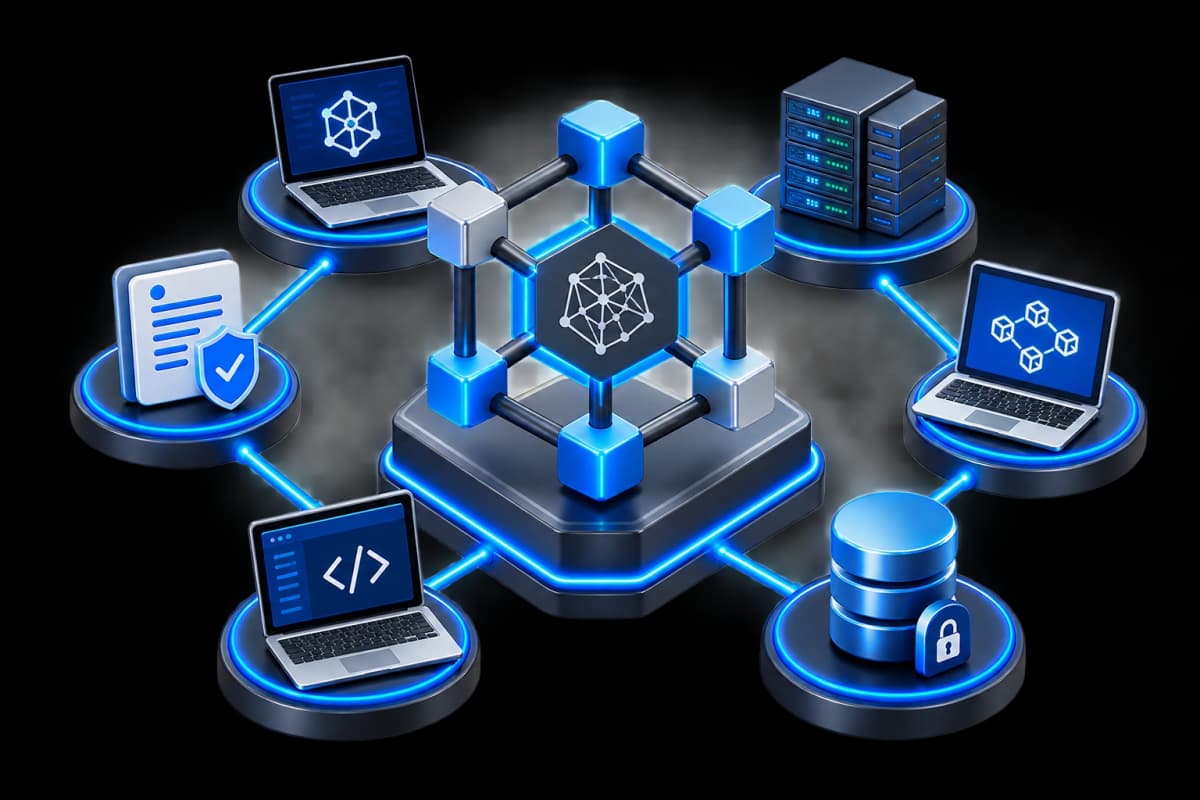
Hyperledger Blockchain Development refers to building private or permissioned blockchain networks where known organizations can exchange data and execute transactions under defined business rules. Instead of relying on anonymous participants, Hyperledger uses identity-based access, consensus mechanisms, channels, and smart contracts to control how information moves across a network. Hyperledger Fabric development is particularly suited to enterprise environments requiring privacy and traceability.
The real value of Hyperledger blockchain development is its ability to fit blockchain into existing operations rather than replacing them completely. For example, manufacturers can record supplier events, banks can coordinate transaction workflows, and healthcare organizations can share verified records with controlled access. Through smart contract development, API integration, and distributed ledger technology, Hyperledger enterprise blockchain development can create a shared source of trusted data across multiple parties.

Hyperledger supports enterprise blockchain networks with permissioned access, data privacy, smart contracts, and scalable architecture. It helps organizations securely share verified information, automate workflows, and maintain transparent records across trusted business partners.
Control who can join the blockchain network and what they can access.
Keep sensitive business information visible only to authorized participants.
Support growing transaction volumes and multiple organizations without relying on public blockchain infrastructure.
Automate business rules, approvals, settlements, and other repetitive workflows through chaincode.
Authenticate participants using trusted digital identities rather than anonymous wallet addresses.
Configure consensus, identity services, databases, and other components according to specific enterprise requirements.
Share selected transaction details between authorized parties while keeping other network participants excluded.
Connect Hyperledger networks with existing ERP, CRM, payment, supply chain, and enterprise applications.
Maintain an immutable record of transactions that helps organizations verify activities and trace changes.
Allow suppliers, banks, manufacturers, healthcare providers, or other partners to work from a shared ledger.
Apply Hyperledger to supply chain tracking, trade finance, digital identity, asset management, healthcare, and financial workflows.
Build on established Hyperledger technologies and adapt the network architecture without being locked into a single proprietary blockchain platform.
Our Hyperledger Blockchain Development Services cover custom network development, smart contracts, private data sharing, API integration, and enterprise blockchain applications. We design Hyperledger solutions around your existing workflows, helping teams manage trusted transactions, controlled access, and reliable data exchange across business networks.
Build permissioned blockchain networks tailored to specific enterprise workflows and access requirements.
Develop blockchain applications around business processes, industry requirements, and operational goals.
Create and deploy chaincode that automates business rules, transactions, approvals, and agreements.
Configure organizations, peers, ordering services, channels, identities, and network policies.
Establish controlled blockchain environments where only authorized participants can access business data.
Connect blockchain applications with ERP, CRM, payment platforms, databases, APIs, and existing enterprise systems.
Develop secure wallet functionality for managing identities, credentials, and blockchain transactions.
Create APIs that allow enterprise applications to communicate with Hyperledger networks and smart contracts.
Build user-facing web and mobile applications that interact with enterprise blockchain infrastructure.
Modernize existing Hyperledger networks, update components, and migrate configurations with minimal disruption.
Implement identity management, permission controls, certificate authorities, encryption, and transaction-level security.
Monitor network performance, troubleshoot issues, optimize infrastructure, and maintain blockchain applications over time.
We build practical Hyperledger solutions for supply chains, finance, healthcare, identity, asset management, and enterprise workflows, using permissioned networks, smart contracts, secure data sharing, and trusted transaction records.
Permissioned blockchain networks designed for controlled participation and secure business collaboration.
Track products, shipments, suppliers, and transactions with a shared and auditable ledger.
Digitize documentation, approvals, and transaction workflows between financial institutions and trading partners.
Manage verified organizational identities and access permissions across blockchain networks.
Represent and manage real-world or digital assets through blockchain-based ownership records.
Create shared blockchain environments where multiple organizations can exchange trusted data while maintaining defined access controls.

Enable controlled sharing of verified healthcare information between authorized participants.
Improve visibility across purchasing, supplier verification, approvals, and transaction records.
Develop business applications that connect users and organizations to Hyperledger networks.
Store verifiable records and help organizations validate documents without relying on fragmented databases.
Automate business rules, approvals, settlements, and contractual workflows using chaincode.
Support secure transaction processing, reconciliation, settlement, and inter-organizational data exchange.
Permissioned blockchain networks designed for controlled participation and secure business collaboration.
Track products, shipments, suppliers, and transactions with a shared and auditable ledger.
Digitize documentation, approvals, and transaction workflows between financial institutions and trading partners.
Manage verified organizational identities and access permissions across blockchain networks.
Represent and manage real-world or digital assets through blockchain-based ownership records.
Enable controlled sharing of verified healthcare information between authorized participants.
Support secure transaction processing, reconciliation, settlement, and inter-organizational data exchange.
Automate business rules, approvals, settlements, and contractual workflows using chaincode.
Store verifiable records and help organizations validate documents without relying on fragmented databases.
Develop business applications that connect users and organizations to Hyperledger networks.
Improve visibility across purchasing, supplier verification, approvals, and transaction records.
Create shared blockchain environments where multiple organizations can exchange trusted data while maintaining defined access controls.
Our Hyperledger Blockchain Development includes permissioned networks, smart contracts, private data channels, identity management, system integration, and scalable architecture, helping enterprises manage secure transactions, trusted data, and collaborative workflows.
Control network participation with defined identities, roles, and access permissions.
Use chaincode to automate business rules, approvals, transactions, and workflow processes.
Allow selected participants to exchange sensitive information without exposing it across the entire network.
Authenticate organizations and users through digital certificates and role-based permissions.
Build blockchain infrastructure that can support growing participants, transactions, and business workloads.
Connect Hyperledger networks with ERP, CRM, databases, APIs, and existing business applications.
Configure consensus mechanisms based on the network's performance, governance, and transaction requirements.
Maintain tamper-resistant records that improve traceability, accountability, and auditability.
Enable multiple organizations to exchange verified business data while maintaining control over sensitive information.
Customize key blockchain components to match specific enterprise requirements and operational workflows.
Support efficient business transactions across interconnected organizations and enterprise networks.
Track network activity, transaction performance, participant behavior, and infrastructure health.
Hyperledger Blockchain Architecture connects organizations through permissioned networks, peers, smart contracts, channels, ordering services, and shared ledgers. This structure enables controlled data access, verified transactions, workflow automation, and traceability.
Each participating organization operates with defined roles, identities, and permissions within the Hyperledger network.
Issues and manages digital certificates that verify the identity of users, applications, and network participants.
Maintain the distributed ledger, execute smart contracts, and validate transactions according to network rules.
Business applications submit transaction requests and interact with the blockchain through SDKs or APIs.
Define business logic and determine how transactions are processed, validated, and recorded.
Create private communication and transaction spaces between selected organizations within the same blockchain network.

Collects valid transactions, establishes their sequence, and packages them into blocks for distribution.
Maintains a blockchain of transaction history along with the current state of business data.
Stores the latest values of assets and records, allowing applications to retrieve current information efficiently.
Specifies which organizations or peers must approve a transaction before it can be committed.
Peers verify endorsements, transaction rules, and data consistency before adding transactions to the ledger.
Once validated transactions are committed, the ledger provides a traceable record that supports transparency, accountability, and auditing.

Each participating organization operates with defined roles, identities, and permissions within the Hyperledger network.
Issues and manages digital certificates that verify the identity of users, applications, and network participants.
Maintain the distributed ledger, execute smart contracts, and validate transactions according to network rules.
Business applications submit transaction requests and interact with the blockchain through SDKs or APIs.
Define business logic and determine how transactions are processed, validated, and recorded.
Create private communication and transaction spaces between selected organizations within the same blockchain network.
Collects valid transactions, establishes their sequence, and packages them into blocks for distribution.
Maintains a blockchain of transaction history along with the current state of business data.
Stores the latest values of assets and records, allowing applications to retrieve current information efficiently.
Specifies which organizations or peers must approve a transaction before it can be committed.
Peers verify endorsements, transaction rules, and data consistency before adding transactions to the ledger.
Once validated transactions are committed, the ledger provides a traceable record that supports transparency, accountability, and auditing.
Hyperledger Integration With Existing Systems connects blockchain networks with ERP, CRM, databases, APIs, and legacy applications. It enables secure data exchange, workflow automation, transaction synchronization, and better visibility without replacing core business infrastructure.
Connect Hyperledger with ERP platforms to synchronize transactions, inventory, procurement, and financial records.
Link blockchain data with CRM systems to support verified customer, partner, and transaction information.
Use REST APIs, GraphQL, or enterprise APIs to connect Hyperledger networks with existing applications.
Establish controlled data exchange between Hyperledger and SQL, NoSQL, or cloud databases.
Connect blockchain infrastructure with older enterprise applications without requiring a complete technology replacement.
Allow existing applications to trigger smart contracts for automated approvals, transactions, and business workflows.
Integrate blockchain networks with payment gateways and financial systems for transaction processing and reconciliation.
Deploy Hyperledger components alongside existing cloud environments and enterprise infrastructure.
Connect enterprise identity providers with Hyperledger certificate-based authentication and permission management.
Enable applications to exchange relevant blockchain and business data through event-driven integration.
Connect existing business processes with smart contracts to reduce manual verification, approvals, and reconciliation.
Implement integration monitoring, logging, error handling, and data synchronization mechanisms to maintain reliable system communication.
Hyperledger Blockchain Development offers controlled access, data privacy, transaction traceability, and smart contract automation. It helps enterprises build permissioned blockchain networks that support secure collaboration, streamlined workflows, and reliable data sharing.
Keep sensitive business information accessible only to authorized participants within the network.
Define who can join the network and assign specific roles and permissions.
Enable organizations to exchange verified information without exposing unnecessary data.
Automate approvals, transactions, agreements, and business rules through chaincode.
Maintain a clear transaction history that helps organizations track activities across business processes.
Design blockchain networks to support growing transaction volumes and participating organizations.
Create a shared environment where suppliers, partners, institutions, and other stakeholders can work with trusted data.
Replace repetitive verification, reconciliation, and approval tasks with automated blockchain workflows.
Connect Hyperledger networks with ERP, CRM, databases, APIs, and existing enterprise applications.
Maintain consistent and tamper-resistant records that make business activities easier to verify and audit.
Customize network components, governance rules, identities, channels, and smart contracts according to business requirements.
Provide participating organizations with a shared source of verified transaction data while maintaining defined access controls.
Our Hyperledger Development Process starts with understanding business requirements and network goals. We then plan architecture, develop smart contracts, integrate existing systems, test security, deploy the network, and provide ongoing support.
Understand your business goals, participants, workflows, data requirements, and blockchain use case.
Define organizations, peers, channels, identity management, consensus, data flow, and infrastructure requirements.
Create and test chaincode that handles business rules, transactions, approvals, and workflow automation.
Connect the Hyperledger network with existing ERP, CRM, databases, APIs, and enterprise applications.
Test transactions, permissions, smart contracts, security, performance, and network reliability before deployment.
Monitor network performance, resolve technical issues, apply updates, and optimize the Hyperledger environment as requirements evolve.
Understand your business goals, participants, workflows, data requirements, and blockchain use case.
Define organizations, peers, channels, identity management, consensus, data flow, and infrastructure requirements.
Create and test chaincode that handles business rules, transactions, approvals, and workflow automation.
Connect the Hyperledger network with existing ERP, CRM, databases, APIs, and enterprise applications.
Test transactions, permissions, smart contracts, security, performance, and network reliability before deployment.
Monitor network performance, resolve technical issues, apply updates, and optimize the Hyperledger environment as requirements evolve.

At CryptoApe, we start with the business problem, not the blockchain technology. Our team maps participants, data flows, access rules, and transaction requirements before selecting the right Hyperledger architecture. This approach helps create permissioned blockchain networks where organizations can collaborate without exposing information that should remain private.
Our Hyperledger Blockchain Development Services cover Fabric networks, chaincode, identity management, private channels, API integration, and enterprise application connectivity. We also consider how the network will operate after launch, including testing, monitoring, upgrades, and support. The result is a practical Hyperledger solution designed to fit existing systems and actual business workflows.
At CryptoApe, we use modern, secure, and scalable tech stacks to craft high-performance blockchain & fintech solutions tailored to get Global Reach.













Hyperledger Blockchain Development involves building permissioned blockchain networks for businesses. It can include Hyperledger Fabric, smart contracts, identity management, private channels, transaction processing, and integration with existing enterprise systems.
Hyperledger is designed for environments where organizations need controlled access, data privacy, transaction traceability, and collaboration between known participants. Its modular architecture also allows businesses to configure networks around specific operational requirements.
Businesses can build supply chain platforms, trade finance systems, digital identity solutions, asset management applications, healthcare data networks, procurement systems, and other enterprise blockchain applications using Hyperledger technologies.
Yes. Hyperledger networks can connect with ERP, CRM, databases, payment systems, APIs, and legacy applications. This allows blockchain workflows and verified transaction data to work alongside existing business infrastructure.
The timeline depends on the network architecture, number of participants, smart contract complexity, integrations, security requirements, and application scope. A simple proof of concept may take weeks, while a production enterprise network can require several months.
Fill a valid information below to get started with our software.
Get Live Demo Today, Instant Launch, and Free consultation.

CryptoApe is an exclusive blockchain and cryptocurrency development company that offers instant and complete crypto solutions to kickstart your business.
Copyrights © 2026 CryptoApe. All Rights Reserved.
