A DAO Development Company helps turn community-led ideas into working blockchain systems where rules are enforced through smart contracts rather than a central authority. From proposal creation and token-weighted voting to treasury controls and member permissions, DAO development connects governance with real operations. Well-designed DAO solutions make participation traceable, decisions verifiable, and organizational workflows easier to coordinate across distributed communities.
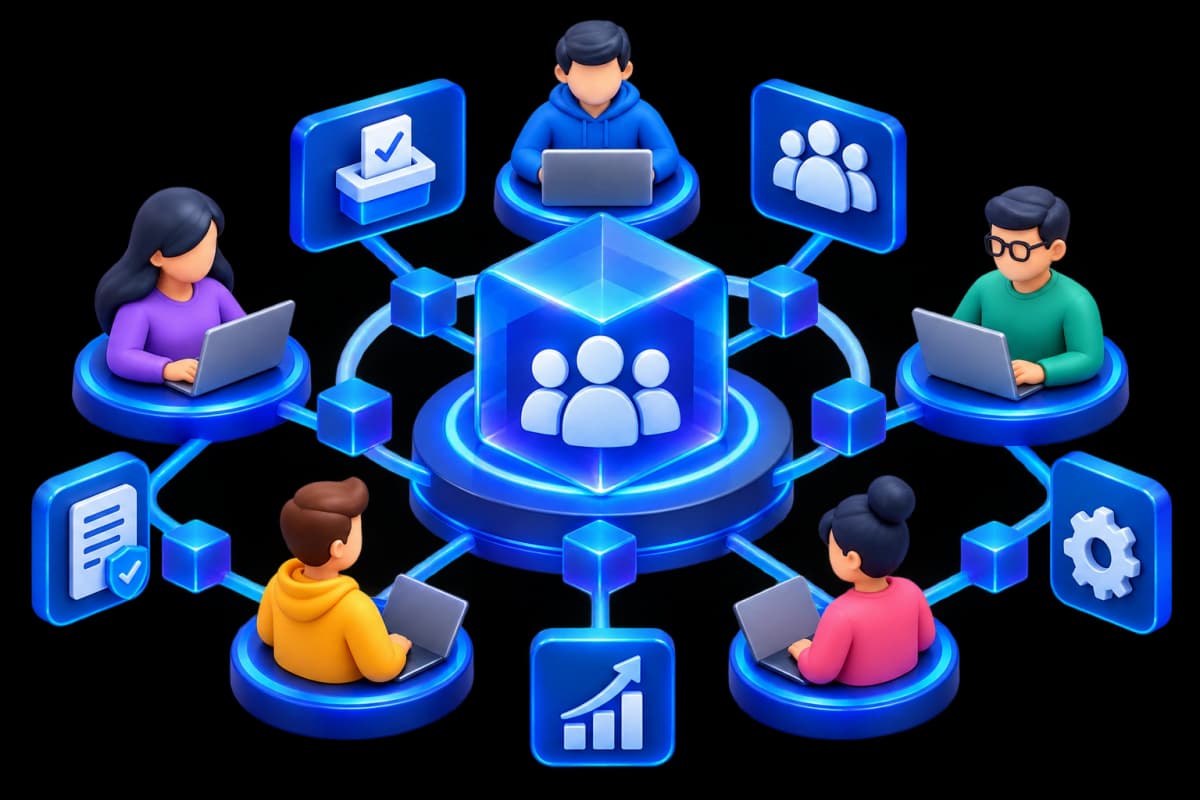
DAO development is the process of building a blockchain-based organization where rules, responsibilities, and decision-making are defined before members begin participating. Instead of depending on one administrator, a DAO can use smart contracts to handle proposals, voting, membership, treasury actions, and approved transactions. This creates a verifiable governance framework where participants can see how decisions are proposed, approved, and executed.
In practical terms, DAO development connects community governance with real operational needs. A DAO may use governance tokens, voting mechanisms, proposal workflows, treasury management, and role-based permissions to coordinate contributors or manage shared assets. The right DAO architecture depends on participation rules, voting logic, security requirements, and the level of automation needed for the organization.

Businesses choose our DAO development to simplify decentralized governance through secure smart contracts, transparent voting, treasury management, flexible governance models, and scalable blockchain architecture that supports accountable community decision-making.
Governance structures designed around your organization’s members, roles, voting rules, and operational requirements.
Automates approved governance actions, treasury operations, and predefined workflows through blockchain-based logic.
Keeps proposals, voting activity, approvals, and important decisions verifiable on-chain.
Supports token-based voting, weighted voting, quorum rules, delegated voting, and other governance models.
Establishes controlled workflows for managing DAO funds, community assets, and approved transactions.
DAO architecture designed to support growing participation, transactions, and governance activity.
Connects governance tokens with participation rights, voting power, and defined community responsibilities.
Defines contributor, voter, administrator, and other governance roles according to the DAO structure.
Organizes proposal submission, review, voting, approval, and execution into a structured governance workflow.
DAO solutions can be structured for blockchain ecosystems that support your project’s technical and governance requirements.
Simplifies complex blockchain interactions so members can participate without unnecessary technical friction.
Builds a flexible governance foundation that can evolve as membership, treasury activity, and organizational needs change.
We address practical blockchain challenges such as centralized control, complex governance, smart contract risks, unclear voting, treasury management, scalability, and limited transparency through structured DAO development and governance solutions.
Replace single-point control with transparent, blockchain-based governance and community voting.
Define proposal, voting, quorum, delegation, and execution rules through structured DAO governance logic.
Automate approved actions using smart contracts and predefined execution workflows.
Establish controlled approval mechanisms for managing DAO funds and shared digital assets.
Record voting activity and governance outcomes on-chain for easier verification and accountability.
Create traceable records of proposals, votes, approvals, and executed decisions for greater organizational transparency.

Create intuitive governance workflows for proposals, voting, delegation, and community engagement.
Structure DAO solutions to support relevant blockchain networks and multi-chain governance requirements.
Connect governance, treasury management, token utilities, member roles, and smart contract execution within one ecosystem.
Design blockchain infrastructure and governance workflows to handle increasing users, proposals, and transactions.
Apply security-focused architecture, testing, access controls, and contract validation to reduce implementation risks.
Support token-based, weighted, delegated, quadratic, and other voting mechanisms based on project requirements.
Replace single-point control with transparent, blockchain-based governance and community voting.
Define proposal, voting, quorum, delegation, and execution rules through structured DAO governance logic.
Automate approved actions using smart contracts and predefined execution workflows.
Establish controlled approval mechanisms for managing DAO funds and shared digital assets.
Record voting activity and governance outcomes on-chain for easier verification and accountability.
Create intuitive governance workflows for proposals, voting, delegation, and community engagement.
Support token-based, weighted, delegated, quadratic, and other voting mechanisms based on project requirements.
Apply security-focused architecture, testing, access controls, and contract validation to reduce implementation risks.
Design blockchain infrastructure and governance workflows to handle increasing users, proposals, and transactions.
Connect governance, treasury management, token utilities, member roles, and smart contract execution within one ecosystem.
Structure DAO solutions to support relevant blockchain networks and multi-chain governance requirements.
Create traceable records of proposals, votes, approvals, and executed decisions for greater organizational transparency.
Our DAO development services cover smart contracts, governance frameworks, voting systems, token management, treasury controls, and proposal workflows, helping organizations create transparent, secure, and practical blockchain-based decision-making systems.
Build a DAO architecture around your governance rules, member roles, voting structure, and operational requirements.
Develop smart contracts for proposals, voting, treasury actions, membership, and automated governance execution.
Establish transparent governance frameworks covering decision rights, quorum requirements, voting power, and proposal approval.
Create governance tokens that can define participation rights, voting power, incentives, and ecosystem utility.
Implement token-weighted, delegated, quadratic, or customized voting models based on your governance requirements.
Build controlled workflows for managing community funds, digital assets, approvals, and treasury transactions.
Develop structured proposal workflows covering submission, discussion, voting, approval, and on-chain execution.
Configure membership rules, contributor roles, access permissions, and participation models for different community structures.
Create DAO solutions that can operate across compatible blockchain networks while maintaining consistent governance logic.
Connect DAOs with wallets, DeFi protocols, token systems, analytics platforms, and other Web3 infrastructure.
Strengthen smart contract architecture through testing, access controls, vulnerability checks, and security-focused implementation.
Support governance improvements, smart contract updates, feature enhancements, blockchain migrations, and ongoing technical maintenance.
We build DAO solutions for DeFi protocols, investment communities, enterprises, creators, and Web3 ecosystems, combining smart contracts, token governance, voting systems, treasury management, and transparent on-chain decision-making.
Coordinate collective capital allocation with structured proposals, voting mechanisms, treasury controls, and member participation.
Support decentralized protocols with governance systems for parameter changes, treasury management, liquidity decisions, and protocol upgrades.
Help creators and communities manage collections, shared assets, royalties, proposals, and collaborative decisions.
Build governance frameworks that allow token holders to influence protocol parameters, upgrades, and ecosystem policies.
Create controlled systems for collective asset management, spending proposals, approvals, and on-chain fund movements.
Enable members to propose, discuss, and vote on decisions through transparent blockchain governance.
Develop permission-based governance systems for organizations requiring defined roles, approval workflows, treasury controls, and auditable decisions.
Automate community-driven grant proposals, evaluation, voting, funding approvals, and transparent allocation of resources.
Build member-driven communities with token-based participation, governance rules, access controls, and collaborative decision-making.
Coordinate distributed contributors, assign responsibilities, manage proposals, and organize decentralized service operations.
Enable communities to collectively manage digital assets, acquisitions, voting rights, and shared ownership structures.
Design governance ecosystems that connect compatible blockchain networks, wallets, tokens, and smart contracts for broader Web3 operations.
Enable members to propose, discuss, and vote on decisions through transparent blockchain governance.
Coordinate collective capital allocation with structured proposals, voting mechanisms, treasury controls, and member participation.
Support decentralized protocols with governance systems for parameter changes, treasury management, liquidity decisions, and protocol upgrades.
Help creators and communities manage collections, shared assets, royalties, proposals, and collaborative decisions.
Build governance frameworks that allow token holders to influence protocol parameters, upgrades, and ecosystem policies.
Create controlled systems for collective asset management, spending proposals, approvals, and on-chain fund movements.
Automate community-driven grant proposals, evaluation, voting, funding approvals, and transparent allocation of resources.
Build member-driven communities with token-based participation, governance rules, access controls, and collaborative decision-making.
Coordinate distributed contributors, assign responsibilities, manage proposals, and organize decentralized service operations.
Enable communities to collectively manage digital assets, acquisitions, voting rights, and shared ownership structures.
Design governance ecosystems that connect compatible blockchain networks, wallets, tokens, and smart contracts for broader Web3 operations.
Develop permission-based governance systems for organizations requiring defined roles, approval workflows, treasury controls, and auditable decisions.
Our DAO development features include smart contract automation, on-chain voting, governance tokens, treasury controls, proposal management, wallet integration, role permissions, and transparent transaction records for secure decentralized governance.
Automates predefined DAO rules, approved actions, proposal execution, and governance workflows directly on the blockchain.
Enables members to participate in transparent governance using token-weighted, delegated, quadratic, or customized voting mechanisms.
Supports proposal creation, discussion, voting periods, quorum checks, approval, rejection, and execution.
Connects governance tokens with voting rights, participation levels, delegation, and ecosystem utility.
Provides structured controls for managing digital assets, fund allocation, spending proposals, and approved transactions.
Defines permissions for members, contributors, administrators, delegates, and other governance participants.
Configures minimum participation, voting thresholds, approval requirements, and execution conditions.
Adds additional authorization layers for sensitive treasury transactions and administrative operations.
Maintains verifiable on-chain records of proposals, votes, approvals, treasury movements, and executed decisions.
Connects compatible Web3 wallets for secure authentication, token ownership verification, voting, and blockchain transactions.
Provides visibility into voting participation, proposal activity, token distribution, treasury movements, and governance trends.
Supports growing communities, governance activity, smart contract interactions, and evolving DAO requirements across suitable blockchain networks.
DAO development supports transparent decision-making, automated governance, community participation, treasury control, verifiable records, flexible voting, and reduced centralization, helping Web3 organizations coordinate activities through clear blockchain-based governance rules.
DAO governance records proposals, votes, approvals, and outcomes on-chain, making important decisions easier to verify.
Distributes decision-making authority across defined members, token holders, contributors, or governance participants.
Smart contracts can automatically execute approved actions based on predefined rules and conditions.
Gives eligible members structured ways to submit proposals, vote, delegate authority, and contribute to governance.
Defines voting power, quorum, proposal requirements, permissions, and execution conditions within a consistent governance framework.
Creates structured processes for proposing, approving, tracking, and executing collective fund movements.
Maintains an auditable history of governance activity, transactions, treasury operations, and member decisions.
Supports governance approaches such as token-weighted, delegated, quadratic, and customized voting mechanisms.
Enables geographically distributed participants to coordinate through shared blockchain infrastructure without relying on a single location.
Clearly defined roles, permissions, proposals, and transaction records make governance responsibilities easier to track.
DAO architecture can evolve with growing communities, new governance requirements, additional services, and blockchain integrations.
DAOs can connect with wallets, tokens, DeFi protocols, NFT platforms, and other Web3 applications to support broader decentralized operations.
We translate DAO requirements into practical blockchain systems by defining governance rules, designing smart contracts, configuring voting and treasury workflows, integrating Web3 tools, testing security, and preparing deployment.
Define the DAO’s purpose, target participants, governance objectives, business rules, and decision-making requirements.
Establish voting rights, proposal rules, quorum thresholds, delegation logic, membership structure, and execution conditions.
Select a suitable blockchain based on transaction costs, scalability, smart contract capabilities, ecosystem compatibility, and governance requirements.
Map the relationship between governance contracts, tokens, wallets, treasury systems, frontend applications, and external Web3 integrations.
Define governance token utility, voting power, distribution logic, membership eligibility, and participation rules.
Develop the core contracts responsible for proposals, voting, treasury operations, permissions, and automated governance execution.
Build user-friendly interfaces for connecting wallets, submitting proposals, reviewing governance activity, and participating in votes.
Configure multi-signature controls, spending rules, role permissions, approval workflows, and treasury transaction logic.
Connect smart contracts with wallets, token systems, blockchain networks, analytics tools, and required Web3 infrastructure.
Test governance scenarios, contract interactions, access controls, voting logic, edge cases, and potential security vulnerabilities.
Deploy verified smart contracts, configure the production environment, initialize governance parameters, and launch the DAO ecosystem.
Track governance participation, contract activity, treasury operations, and system performance while refining features as DAO requirements evolve.
DAO development can benefit DeFi protocols, Web3 startups, investment groups, NFT communities, gaming projects, enterprises, creators, and membership organizations seeking transparent governance, shared decision-making, and automated blockchain workflows.
Manage protocol governance, parameter changes, treasury decisions, and community voting through structured on-chain governance.
Build decentralized operating models that distribute decision-making among founders, contributors, token holders, and communities.
Coordinate collective investment decisions, proposal approvals, asset management, and transparent treasury operations.
Give collectors and creators a structured way to govern collections, shared assets, community initiatives, and ecosystem decisions.
Enable players and token holders to participate in game development, rewards, asset governance, and ecosystem decisions.
Support collaborative decisions around content, digital assets, royalties, community funds, and shared projects.
Use permission-based DAO frameworks for collaborative decision-making, internal governance, partner coordination, and controlled treasury operations.
Automate proposal evaluation, community voting, funding allocation, and transparent grant distribution.
Allow stakeholders to participate in upgrades, governance proposals, ecosystem policies, and protocol development decisions.
Manage membership rights, community proposals, voting participation, shared resources, and contributor roles.
Coordinate distributed contributors, task allocation, governance decisions, payments, and operational responsibilities.
Connect tokens, wallets, smart contracts, DeFi applications, and governance systems to create coordinated decentralized operations.

CryptoApe treats DAO development as a governance problem first and a technology project second. We map who can propose, who can vote, how much voting power they hold, when a decision becomes valid, and what happens after approval. That logic is then translated into smart contracts, token governance, treasury controls, and permission structures that match the organization’s actual operating model.
The goal is not simply to launch another DAO interface. Our DAO development approach focuses on making governance rules clear, auditable, and practical for the people using them. From blockchain architecture and contract testing to wallet integration and on-chain execution, CryptoApe connects each technical layer so DAO solutions can support real participation, accountable decisions, and changing Web3 requirements.
At CryptoApe, we use modern, secure, and scalable tech stacks to craft high-performance blockchain & fintech solutions tailored to get Global Reach.




Yes. A DAO does not need to replace your existing platform. The governance layer can be designed around your current product, community, token, treasury, or protocol, with specific rules for who can propose, vote, approve, and execute decisions.
The voting mechanism can be designed around how decisions should actually work. Depending on the project, this may include token-weighted voting, delegated voting, quorum requirements, voting thresholds, or customized governance logic rather than forcing a standard model.
Treasury governance can include proposal approval, spending limits, multi-signature authorization, role-based permissions, and predefined execution rules. This creates clear controls around how community funds are proposed, approved, and transferred.
Yes. Smart contracts can execute predefined actions once governance conditions are satisfied. Depending on the design, an approved proposal could trigger token changes, treasury transactions, protocol updates, or other on-chain operations without requiring manual intervention.
DAO architecture can be designed with future governance changes in mind. Upgrade mechanisms, adjustable voting parameters, new roles, additional integrations, and evolving participation rules can help the governance system adapt as the community, treasury, and operational requirements expand.
Fill a valid information below to get started with our software.
Get Live Demo Today, Instant Launch, and Free consultation.

CryptoApe is an exclusive blockchain and cryptocurrency development company that offers instant and complete crypto solutions to kickstart your business.
Copyrights © 2026 CryptoApe. All Rights Reserved.
